
According to the CRAFT research cited, roughly what share of treatment-refusing people entered treatment after their family used the CRAFT method?
Select one answer.
The problem: when helping keeps the addiction going
If you're the family member who pays the bills, covers the missed shifts, and absorbs the fallout, you may feel like you're the only thing holding your loved one's life together. But the same behaviors that feel like love can quietly remove the natural consequences that would otherwise push someone toward treatment.
Codependency is the internal pattern where your sense of worth and stability gets wired to managing someone else's addiction. Enabling is the set of specific actions that pattern produces — covering debts, telling lies, absorbing consequences that should have been theirs. One is the mindset; the other is the behavior it generates. The clearest test: does this act protect the person from the discomfort that would otherwise push them toward change? If yes, it's enabling — even when it's paying rent, calling in sick for them, or "just this once."
Why codependent habits hurt recovery
As boundaries become distorted, the entire family system deteriorates. Family members may enable, rescue, or attempt to control the person struggling — and in codependent relationships, one person's identity and emotional state become centered on managing another's behavior. That cycle is detrimental for both people and hard to escape alone.
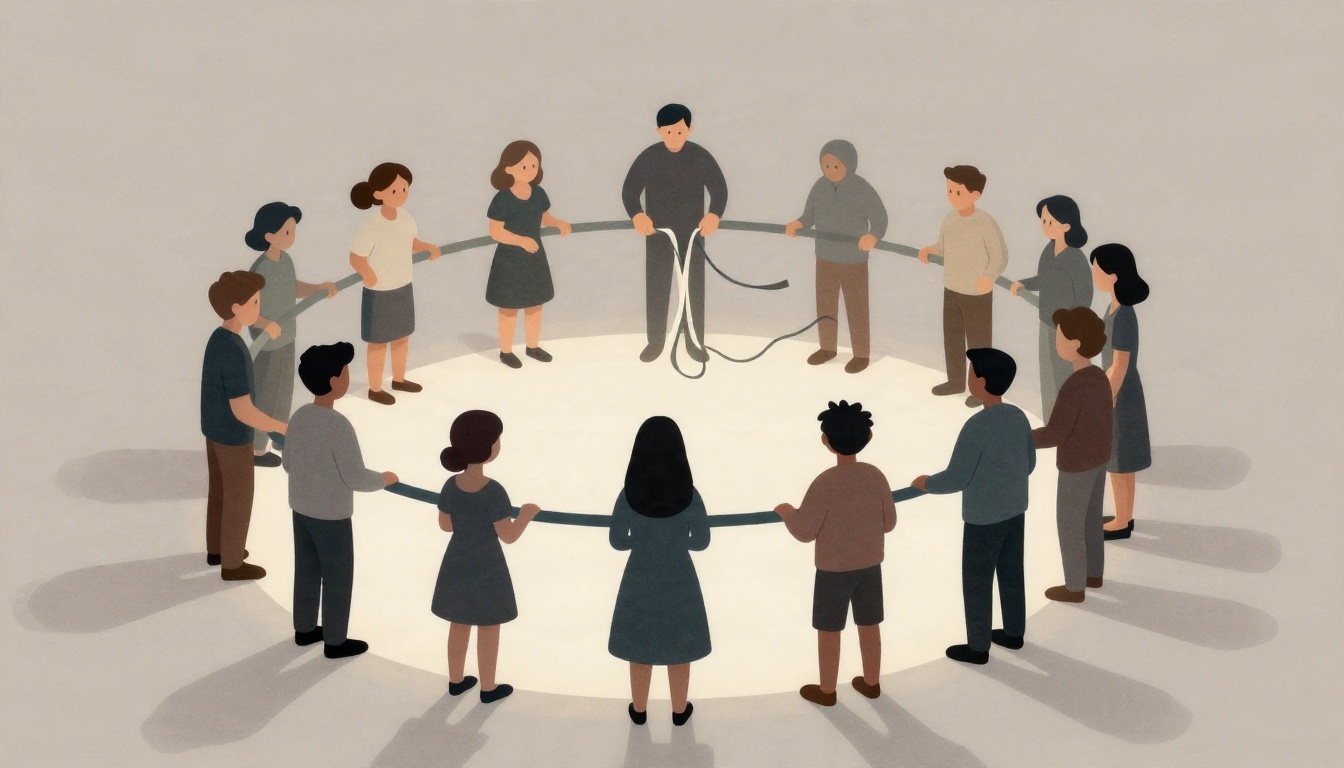
Stopping enabling is not abandonment. It's removing the cushion between a person and reality — which is often what finally makes treatment feel necessary. Families who learn structured skills instead of pleading or ultimatums get results: in one landmark trial, roughly two-thirds of treatment-refusing people entered treatment after their family used the CRAFT method — about three times the rate of Al-Anon-style approaches (Roozen et al., Addiction, 2010).
Boundaries vs. ultimatums
The distinction matters more than most families realize. Ultimatums demand what the other person must do ("stop drinking or I'm leaving"). Boundaries state what you will do ("I will move out by a certain date if active drinking continues"). Boundaries put the choice on actions you can control.
Boundaries are not punishments. They are what you need to protect your own wellbeing while loving someone with addiction — and protecting yourself is necessary, not selfish. The boundary itself does not require the other person's agreement.
A step-by-step checklist to change the pattern
- Name the behavior, not the person. Write down the specific actions you take that shield your loved one from consequences. Keep the list concrete.
- Identify what you need. Financial, emotional, physical, time-related, or enabling-pattern limits.
- State the boundary clearly and calmly using "I" language, and say what you will do if it's violated.
- Follow through consistently. A boundary you don't hold teaches that boundaries aren't real.
- Don't over-explain or debate. State it once; if challenged, restate it briefly.
- Take care of yourself afterward. Plan support for the discomfort that follows.
When guilt-tripping arrives — "you're going to make me use" or "my addiction is your fault" — respond without defending or arguing: "I did not cause your addiction. I cannot cure it. I am protecting myself."
What evidence-based family support looks like
CRAFT (Community Reinforcement and Family Training) works to change your interactions with your loved one so that sober behavior is more rewarding to them than continued substance use. It is "menu-driven," meaning it adapts to your situation rather than following one script (Partnership to End Addiction).
CRAFT teaches concerned family members to care for themselves and take back control of their lives, understand triggers that lead to substance use, reward abstinence and pro-social behavior, withdraw reinforcement and set boundaries for unhealthy behavior, and use positive, assertive communication. It also helps families spot signs that things might escalate to domestic violence and support the person patiently during relapses.
One practical caution: CRAFT isn't widely available and can be expensive, and it requires real effort from family members. That's why structured professional support — rather than trying to run the method alone from an article — tends to make the difference.
Signs you're in a codependent pattern
- You monitor their substance use or conceal its consequences.
- You compromise your own needs to keep the peace.
- You feel responsible for their feelings, choices, and sobriety.
- You organize your entire life around the addiction.
If several of these sound familiar, the goal isn't shame — it's a shift from managing the addiction to supporting recovery while protecting yourself.
How the Featured Expert Can Help
Recovery Life Collective offers certified professional family intervention services in New Jersey and Eastern Pennsylvania, providing evidence-based Total Family Intervention with sliding scale pricing. Their team includes CPRS-certified professionals who aim to increase treatment engagement rates and support entire family systems. You can learn more at recoverylifereferrals.com.
Quick quiz
Test what you've learned before you start your checklist.