
According to McGovern Medical School's psychiatry department, what is one recommended way to handle alcohol at gatherings when you're staying alcohol-free?
Select one answer.
Why your old traditions feel like a trap
If your family celebrations have always revolved around drinking or using, the calendar itself can feel like a minefield. The problem isn't that you lack willpower — it's that the ritual, the people, and the setting are all linked to substance use. Safe Harbor Recovery Center notes that old holiday traditions often involve "people, places, or things" that sit on a person's list of relapse triggers, which is why simply repeating them and hoping for a different outcome rarely works.
Rebuilding traditions isn't about erasing your family's history. It's about separating the meaning of a tradition from the substance that got attached to it. A birthday can still be a birthday without a toast. A holiday can still feel like a holiday without a bar in the corner.
Step 1: Audit what you actually do
Before you change anything, write it down. For each recurring event — holidays, birthdays, game days, summer cookouts — answer these questions:
- What did we do, in order, from start to finish?
- Where was alcohol or drugs present, and who brought them?
- Which parts did the children or non-using family members actually enjoy?
- Which parts caused tension, arguments, or dread?
- Is there a person whose presence reliably makes the event unsafe?
This audit is the same logic used in recovery planning: identify triggers before you're standing in the middle of one. The National Association for Children of Addiction frames the goal plainly — an alcohol- and substance-free gathering should create "more connection without distractions" and "more healing, especially for those reclaiming the holidays."
Step 2: Keep the good, cut the rest
You don't have to throw out every tradition. Safe Harbor's guidance is to "keep the good" — if you know what you need to ditch, it becomes easier to decide what to keep. Maybe the family dinner stays, but the pre-dinner cocktail hour goes. Maybe you still see the relatives you love, but at a different time, in a different place, without the people who undermine recovery.
Ask directly: does this event add to recovery or place it in danger? If the honest answer is danger, you have permission to skip it this year and revisit it later.
Step 3: Build replacement rituals
New traditions work best when they're concrete, repeatable, and tied to a specific date or season. Practical options that families in recovery commonly use:
- A signature non-alcoholic drink. Changes Rehab suggests making a big batch of a festive drink — hot cider, hot cocoa, sparkling juice, or non-alcoholic eggnog — so there's something special in everyone's hand.
- A potluck with purpose. NACoA recommends asking each guest to bring a favorite family dish or comfort food, which shifts the focus from drinking to contribution.
- A food-as-gift station. Set up an area to decorate cookies or package homemade treats to give away.
- Craft and creation corners. Ornaments, gratitude jars, kindness cards, or simple drawing stations give hands something to do.
- Cozy entertainment. A movie marathon, board games, karaoke, or driving around to look at lights are all low-cost, substance-free anchors.
- Volunteering together. A charity drive or a shift at a local shelter turns the season into service.
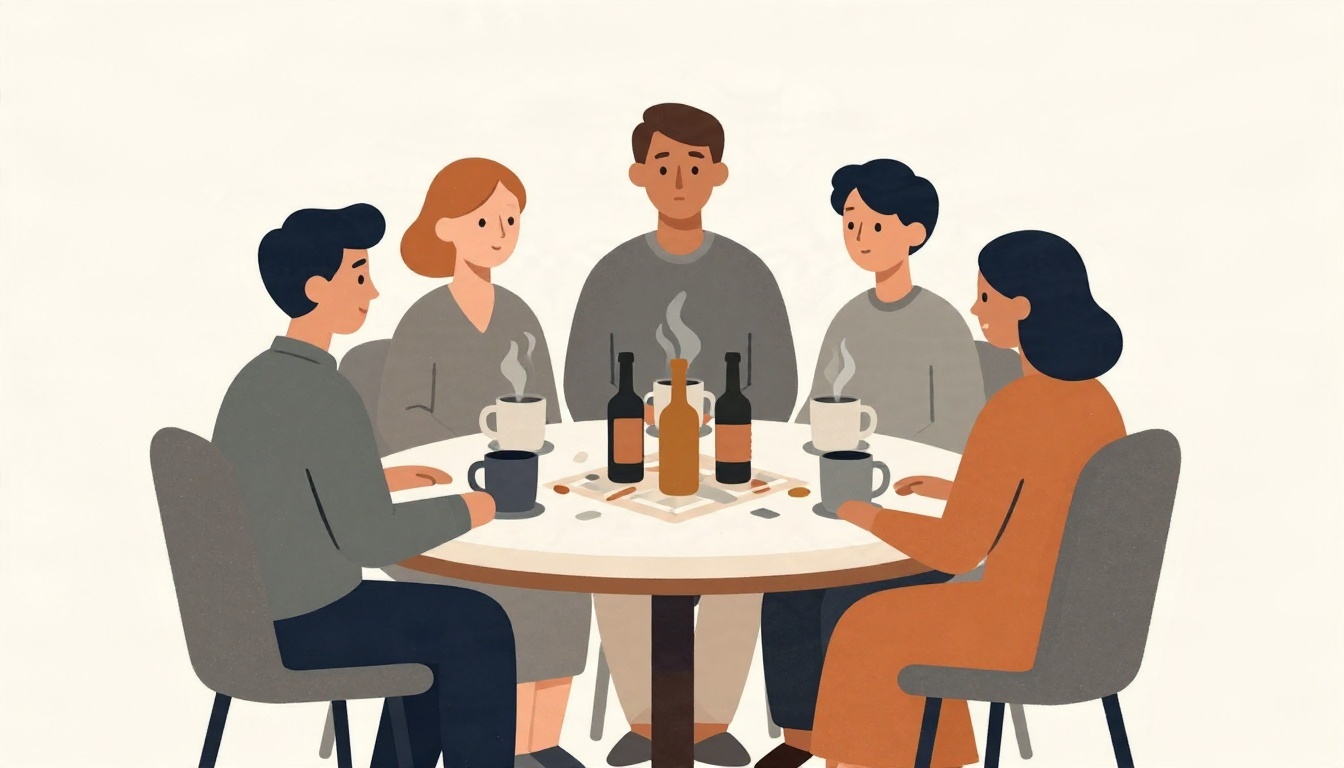
McGovern Medical School's psychiatry department recommends bringing your own non-alcoholic beverages to gatherings and planning in advance how you'll respond to offers — a simple "No, thank you" or "I'm good with what I have."
Step 4: Communicate the change before the event
Surprises create friction. Tell family members in advance what the gathering will and won't include. If you're hosting, you control the environment, which is the simplest way to make it substance-free. If you're attending someone else's event, decide your exit plan, bring a sober friend or family member, and agree on a code word you can use if you need to leave.
Step 5: Make it repeatable
The point of a tradition is that it comes back. Pick two or three of the ideas above, put them on the calendar for next year, and treat them as fixed. Repetition is what turns a one-time sober event into a family ritual — and rituals are what make the new normal feel like home.
Quick checklist
- List every recurring family event and its substance triggers
- Decide which events to keep, modify, or skip this year
- Choose 2–3 replacement rituals and put them on the calendar
- Tell family members what to expect before the day arrives
- Plan your non-alcoholic drink and your response to offers
- Agree on an exit plan and a support person
How the Featured Expert Can Help
Recovery Life Collective provides certified professional family intervention services in New Jersey and Eastern Pennsylvania. Their team uses an evidence-based Total Family Intervention model, includes CPRS-certified professionals, offers sliding scale pricing, and works to increase treatment engagement while supporting the entire family system. You can learn more at recoverylifereferrals.com.